
How Wooden Puzzles Help Adults Reset Their Mental Pace
Updated: Apr 8

Modern life runs fast, faster than the human brain was ever designed to move. Between constant notifications, rushing tasks, and the pressure to stay “on,” most adults operate in a state of permanent cognitive acceleration. The result? Mental fatigue, irritability, scattered thoughts, and a growing inability to simply be present. That’s why wooden puzzles have quietly become a sanctuary for the overstimulated mind. They don’t buzz, light up, or refresh every two seconds. Instead, they slow your thoughts, steady your breath, and gently recalibrate your mental pace, the speed at which your mind processes, reacts, and recovers. In a world obsessed with speed, wooden puzzles offer something rare: permission to slow down.
Why Mental Pace Matters
Your mental pace is the rhythm your brain uses to move through the world—how quickly you solve problems, regulate emotions, and respond to stimuli. When it’s too fast, you feel anxious, jumpy, and easily overwhelmed. When it’s too slow, you feel foggy or disengaged. A healthy mental pace is balanced, flexible, and responsive. Yet research shows that chronic digital stimulation pushes adults into a hyperactive cognitive mode, increasing cortisol and weakening focus. This constant “mental sprinting” is why so many adults feel burnt out without knowing exactly why. Resetting your mental pace isn’t a luxury; it’s maintenance.
How Wooden Puzzles Create Cognitive Slowdown
Wooden puzzles offer a unique kind of reset. The moment your hands touch the pieces, your brain shifts from consumption to exploration. The sensory weight, warmth, and friction of wood slow your motor patterns and encourage deeper focus. As you sort, rotate, and test each piece, your mind naturally synchronizes with the slower, more intentional rhythm of the activity. This gentle deceleration activates your parasympathetic nervous system—the body’s “slow-down-and-settle” mode—reducing stress and restoring clarity. Unlike digital puzzles that keep your brain in a high-stimulation state, wooden puzzles create psychological spaciousness. You feel yourself unclench.
The Science Behind the Reset
When adults work with tactile materials, the brain integrates sensory input in a grounding way. Wooden puzzles engage three key systems:
Working memory, which improves mental organization
Spatial reasoning, which builds quiet concentration
Motor–sensory pathways, which regulate emotional arousal
Together, these systems help the brain shift out of mental overdrive. The repetitive yet meaningful nature of puzzling creates what psychologists call “low-friction cognitive engagement”—a state that promotes clarity, emotional regulation, and steady thought flow. You’re not zoning out; you’re tuning in at the right pace.
Why Wooden Puzzles Work Better Than Digital Options
Digital puzzles may be entertaining, but they keep you locked in the same fast-paced, high-input environment you’re trying to escape. Blue light, notifications, animations, and screen glare accelerate brain activity rather than calm it. Wooden puzzles do the opposite. They:
Reduce visual overload
Encourage slower breathing
Anchor your attention in physical space
Break the cycle of compulsive switching
Replace frantic micro-scrolls with intentional micro-moves
This is why adults describe wooden puzzling as “mentally exhaling.” It’s a break your brain can actually feel.
How CogZart Puzzles Fit Into the Reset
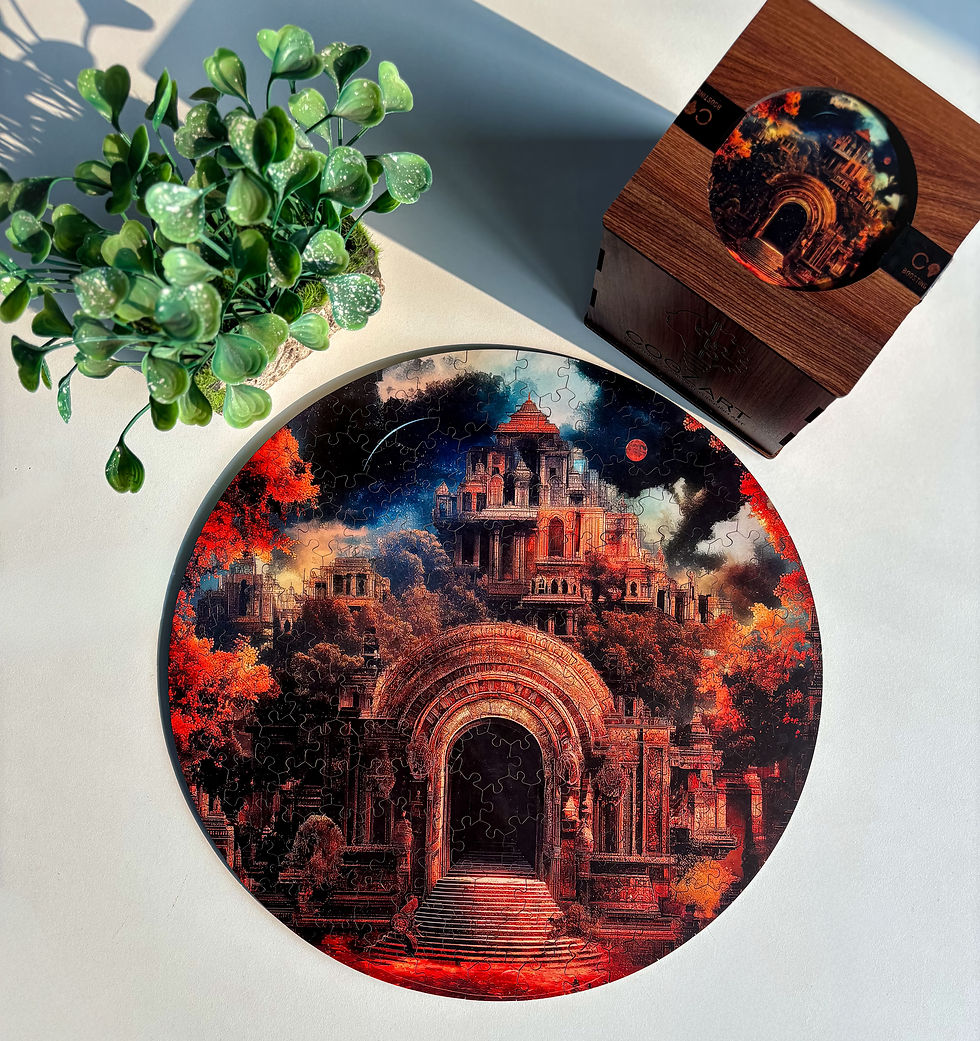
CogZart’s puzzles—especially Circzles and Cogdokus—are intentionally designed for deeper cognitive grounding. The modular shapes, gentle curves, and infinite configurations create a pacing effect: your mind slows down, but your curiosity stays awake. The Chromatic Scale helps you see your progress, reinforcing a sense of calm mastery. Unlike typical puzzles that overwhelm with too much detail or imagery, CogZart puzzles rely on purposeful simplicity. They give your brain just enough challenge to engage, but enough calm to breathe. As we like to say: Train your brain before you treat it.
What a Mental Pace Reset Feels Like
Most people notice it within minutes. The noise in the mind softens. Thoughts stop competing. Your breath becomes deeper without you trying. Instead of racing from task to task, you enter a smooth, steady flow—unhurried, aware, and present. And here’s the best part: once your mental pace resets, everything else feels easier. Emails feel less overwhelming. Decisions feel clearer. Even your mood stabilizes. A 10-minute wooden puzzle session can shift the entire trajectory of your day.
In a world that keeps demanding more speed, wooden puzzles remind us that clarity comes from slowing down. They offer a rare kind of reset—the kind that brings your mind back to its natural rhythm. Wooden puzzles aren’t just toys; they’re tools for mental hygiene, emotional balance, and cognitive recalibration. Your Mind Matters, and giving it moments of slow, grounded play may be the simplest and most powerful way to protect it.
Citation:
Smartphone notifications distract and impair attention-demanding performance; even the presence/expectation of a phone can reduce working memory and sustained attention. ScienceDirect+2OUP Academic+2
Anticipating notifications can raise stress arousal (including cortisol), reinforcing the “always on” cognitive state. NetPsychology


Comments